
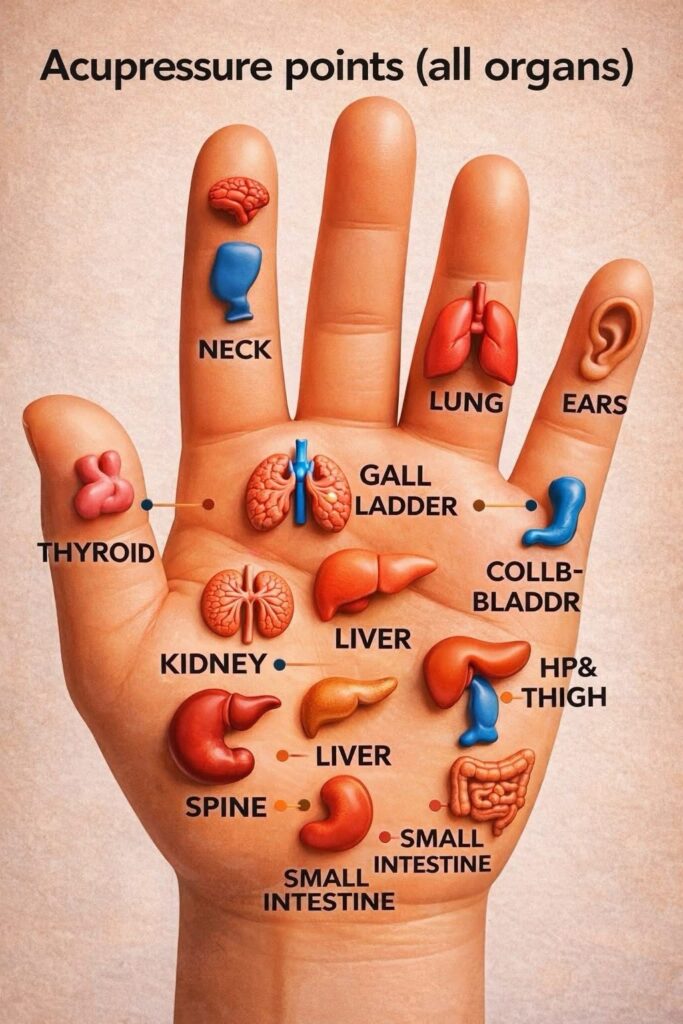
Acupressure is an ancient healing practice that originates from traditional Asian medicine. It involves applying gentle pressure to specific points on the body to stimulate natural healing processes, improve circulation, and restore balance within the body. One fascinating aspect of acupressure is the belief that different areas of the hands correspond to various organs and systems in the body.
The hand is considered a powerful map of the body in many holistic healing traditions. By stimulating certain pressure points in the palm and fingers, practitioners believe it may help support the functioning of internal organs and promote overall wellbeing.
The Concept Behind Hand Acupressure
Hand acupressure works on the principle that the body contains energy pathways often referred to as meridians. These pathways connect organs and tissues throughout the body. When these energy channels become blocked or imbalanced, it may lead to discomfort, stress, or illness.
Applying pressure to specific points on the hands is believed to help restore balance along these pathways. While scientific evidence supporting all acupressure claims is still developing, many people report relief from stress, muscle tension, headaches, and digestive discomfort through regular acupressure practice.
Key Acupressure Points in the Hand
The palm and fingers contain numerous points believed to correspond with different organs and body systems. Understanding these points may help individuals use hand massage techniques to promote relaxation and general health.
1. Brain and Neck Area
The upper sections of the fingers are often associated with the brain and neck region. Massaging the tips of the fingers may help relieve tension headaches, reduce mental fatigue, and promote relaxation.
2. Lung Points
The middle fingers are sometimes linked with lung function. Applying gentle pressure to these areas may encourage deeper breathing and help relieve mild respiratory discomfort or stress-related breathing patterns.
3. Ear and Sensory Points
The ring finger and surrounding areas are associated with the ears and sensory organs. Gentle massage in this region may help improve focus and relieve stress.
4. Thyroid Region
The base of the thumb is often connected with thyroid function in reflexology practices. Stimulating this area may help promote metabolic balance and hormonal regulation, although it should not replace proper medical care.
5. Gallbladder and Liver Points
The central palm area is associated with organs involved in digestion and detoxification, including the gallbladder and liver. Applying gentle circular pressure to this region may support digestive comfort and relaxation.
6. Kidney Points
Areas near the lower palm are linked with kidney health. Gentle massage here may promote circulation and help the body maintain proper fluid balance.
7. Digestive System Points
The lower palm and wrist regions are believed to correspond with the small intestine and digestive tract. Massaging these areas may help relieve bloating, mild stomach discomfort, and digestive tension.
8. Spine and Musculoskeletal Points
The inner edge of the palm is often associated with the spine. Applying gentle pressure along this area may help relieve tension in the back and improve posture awareness.
Potential Benefits of Hand Acupressure
Regular hand acupressure or reflexology may provide several general health benefits, including:
- Reducing stress and anxiety
- Improving blood circulation
- Promoting relaxation throughout the body
- Supporting digestive comfort
- Relieving mild headaches and muscle tension
- Encouraging better breathing patterns
Because the hands contain many nerve endings, gentle massage alone can stimulate relaxation responses in the nervous system.
How to Practice Simple Hand Acupressure
Practicing hand acupressure is simple and can be done almost anywhere. Follow these basic steps:
- Sit comfortably and relax your shoulders.
- Use the thumb of one hand to apply gentle pressure to the palm of the other hand.
- Massage each area in slow circular motions for about 30–60 seconds.
- Move gradually across different parts of the palm and fingers.
- Switch hands and repeat the process.
Consistency is more important than intensity. Gentle and regular stimulation is usually more beneficial than applying strong pressure.
Important Considerations
While acupressure can be a useful relaxation technique, it should not be considered a replacement for professional medical treatment. Individuals experiencing persistent pain, serious illness, or medical conditions should always consult a qualified healthcare professional.
Acupressure works best as a complementary practice that supports overall wellbeing alongside healthy lifestyle habits such as balanced nutrition, regular exercise, adequate hydration, and proper medical care.
https://shorturl.fm/NmcFC
https://shorturl.fm/5ThG8
https://shorturl.fm/vVfHh
https://shorturl.fm/Xu0Pa
https://shorturl.fm/mHZ8C
https://shorturl.fm/13Vl3
https://shorturl.fm/wg3pn
https://shorturl.fm/OX94d
https://shorturl.fm/fIGyV
https://shorturl.fm/Ruy4Q
https://shorturl.fm/ybul0
https://shorturl.fm/59Bxu
https://shorturl.fm/JaO7C
https://shorturl.fm/xJij5
https://shorturl.fm/lagPv
https://shorturl.fm/TAUrQ
https://shorturl.fm/KjyQ4
https://shorturl.fm/UgTX3
https://shorturl.fm/qB7CU
https://shorturl.fm/6D8ef
https://shorturl.fm/T0x7k
https://shorturl.fm/xAZWK
https://shorturl.fm/Z4Yfl
https://shorturl.fm/RiG9Y
https://shorturl.fm/i70BN
https://shorturl.fm/VoF7I
https://shorturl.fm/7p5BN
https://shorturl.fm/oOqMn
https://shorturl.fm/7ojdV
https://shorturl.fm/OitwB
https://shorturl.fm/CPVcp
https://shorturl.fm/FMBAT
https://shorturl.fm/Gnyxv
https://shorturl.fm/ejE4N
https://shorturl.fm/0Jizh
https://shorturl.fm/hNTgm
https://shorturl.fm/AjsLP
https://shorturl.fm/9vAyM
https://shorturl.fm/MXvrb
https://shorturl.fm/r1P8A
https://shorturl.fm/FE7jB
https://shorturl.fm/tszKl
https://shorturl.fm/fcBGW
https://shorturl.fm/BfvhS
https://shorturl.fm/ks7c1
https://shorturl.fm/TJcwW
https://shorturl.fm/Tu7CB
https://shorturl.fm/UNHdq
https://shorturl.fm/OLze4
https://shorturl.fm/qHrqW
https://shorturl.fm/bPlOd
https://shorturl.fm/Rbcwq
https://shorturl.fm/xV871
https://shorturl.fm/L8kcK
https://shorturl.fm/QhCtz
https://shorturl.fm/Wwbqg
https://shorturl.fm/XEFUO
https://shorturl.fm/pf0UE
https://shorturl.fm/4hn31
https://shorturl.fm/DwkRS
https://shorturl.fm/dj0oD
https://shorturl.fm/dB2TG
https://shorturl.fm/fxj0k
https://shorturl.fm/sNi5b
https://shorturl.fm/yBeN3
https://shorturl.fm/QsAe7
https://shorturl.fm/8BeHC
https://shorturl.fm/Fgrpt
https://shorturl.fm/oiHLA
https://shorturl.fm/AX6ii
https://shorturl.fm/pKzZG
https://shorturl.fm/GTtaI
https://shorturl.fm/cjf1M
https://shorturl.fm/otVc2
https://shorturl.fm/1xSne
https://shorturl.fm/7cHPE
https://shorturl.fm/fyRGx
https://shorturl.fm/yRDjq
https://shorturl.fm/niiHp
https://shorturl.fm/yWIJk
https://shorturl.fm/K3zlF
https://shorturl.fm/VNFNQ
https://shorturl.fm/H45TP
https://shorturl.fm/kxNFD
https://shorturl.fm/ajzsH
https://shorturl.fm/zO5Dd
https://shorturl.fm/P7I0d
https://shorturl.fm/KMSBu
https://shorturl.fm/R2E00
https://shorturl.fm/EOUGk
https://shorturl.fm/LUN7p
https://shorturl.fm/vsOBT
https://shorturl.fm/lNOS8
https://shorturl.fm/U0zeV
https://shorturl.fm/wAg1z
https://shorturl.fm/7LqLN
https://shorturl.fm/LJ9FB
https://shorturl.fm/YPRYF
https://shorturl.fm/rfOZj
https://shorturl.fm/SdDSq
https://shorturl.fm/1i1q2
https://shorturl.fm/f0pb6
https://shorturl.fm/VeHjM
https://shorturl.fm/JTEQV
https://shorturl.fm/AuY29
https://shorturl.fm/PB8ok
https://shorturl.fm/Ah8HE
https://shorturl.fm/dP2X2
https://shorturl.fm/9g6nV
https://shorturl.fm/qwpqw
https://shorturl.fm/MiVWl
https://shorturl.fm/aSfMo
https://shorturl.fm/pyObA
https://shorturl.fm/yfOSC
https://shorturl.fm/jAYqZ
https://shorturl.fm/NMqwL
https://shorturl.fm/v3j3T
https://shorturl.fm/KzFQe
https://shorturl.fm/RDzVI
https://shorturl.fm/tVvMF
https://shorturl.fm/SaF45
https://shorturl.fm/hYRZj
https://shorturl.fm/kMT9O
https://shorturl.fm/fnkkY
https://shorturl.fm/hMHBA
https://shorturl.fm/lNvka
https://shorturl.fm/vvskX
https://shorturl.fm/JxWSy
https://shorturl.fm/EifuM
https://shorturl.fm/vdfe3
https://shorturl.fm/CN6vl
https://shorturl.fm/d5eJq
https://shorturl.fm/qAeGe
https://shorturl.fm/oU4Ks
https://shorturl.fm/zg1cX
https://shorturl.fm/iX73J
https://shorturl.fm/oRV5X
https://shorturl.fm/fO1t5
https://shorturl.fm/aDSTu
https://shorturl.fm/e58rT
https://shorturl.fm/EBl2P
https://shorturl.fm/OllbY
https://shorturl.fm/aH0k3
https://shorturl.fm/wJydG
https://shorturl.fm/UvH5h
https://shorturl.fm/fqupu
https://shorturl.fm/rSyrq
https://shorturl.fm/R9dlR
https://shorturl.fm/lpf15
https://shorturl.fm/o7eti
https://shorturl.fm/fAefE
https://shorturl.fm/qMX0V
https://shorturl.fm/8jta9
https://shorturl.fm/gBUDh
https://shorturl.fm/d0rZM
https://shorturl.fm/ZoLxU
https://shorturl.fm/P0Jco
https://shorturl.fm/L0bn9
https://shorturl.fm/eTeKs
https://shorturl.fm/XFmZi
https://shorturl.fm/ydrdU
https://shorturl.fm/homNc
https://shorturl.fm/mgP3X
https://shorturl.fm/apeXf
https://shorturl.fm/sqg7k
https://shorturl.fm/avuW2
https://shorturl.fm/Cc4xq
https://shorturl.fm/Y9fro
https://shorturl.fm/MKhPR
https://shorturl.fm/iohRa
https://shorturl.fm/WoNmk
https://shorturl.fm/qMZeU
https://shorturl.fm/FPUFQ
https://shorturl.fm/AOhE8
https://shorturl.fm/5z3mZ
https://shorturl.fm/pGzzD
https://shorturl.fm/yzhyN
https://shorturl.fm/R1YGN
https://shorturl.fm/fzeDJ
https://shorturl.fm/vmFYY
https://shorturl.fm/xldLv
https://shorturl.fm/zI8OU
https://shorturl.fm/Y3bHA
https://shorturl.fm/gKHPm
https://shorturl.fm/qfDNS
https://shorturl.fm/skjEa
https://shorturl.fm/hVp4t
https://shorturl.fm/cN9pA
https://shorturl.fm/gm8kR
https://shorturl.fm/2XQOJ
https://shorturl.fm/XQ2xz
https://shorturl.fm/utr6b
https://shorturl.fm/gJ2rH